How to Build a Digital Filing Cabinet for Your Entire Life
Transform your chaotic digital life into an organised filing cabinet using Cognitidy. Follow our step-by-step guide to create a life dashboard that captures work, home, health, and personal goals.
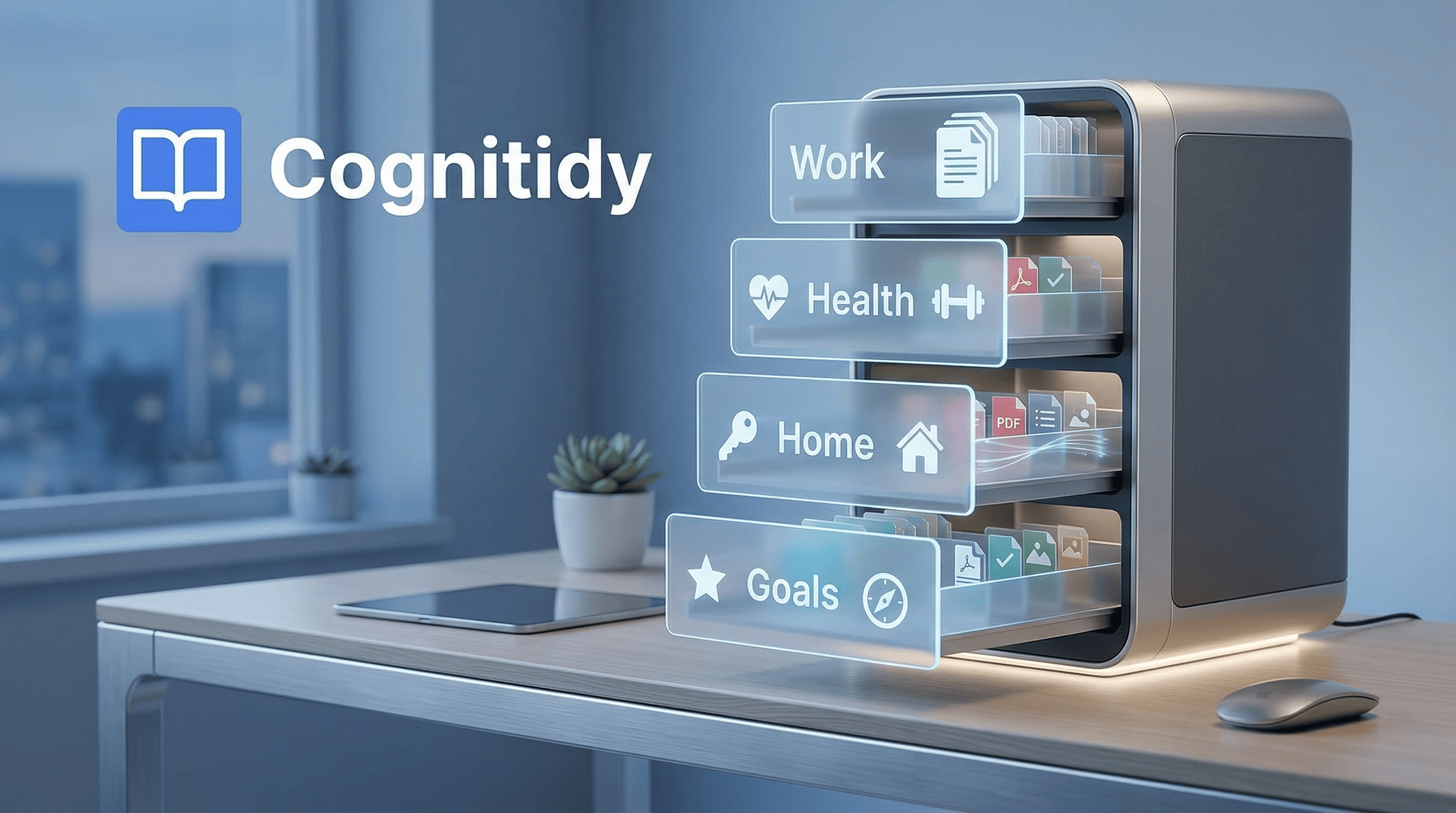
A lot of mental clutter comes from not knowing where things belong. Work tasks sit next to personal reminders. Ideas get mixed up with admin. Important things end up buried under less important ones.
Cognitidy is built to help with that. It is a productivity and organisation app focused on clarity through cognitive filing. Instead of keeping everything in one long list, you organise things using cabinets, bookcases and priorities. That clearer structure can make life feel easier to manage.
Why a Digital Filing Cabinet Helps
The filing cabinet idea is simple because it works. When different parts of life have their own place, it is easier to see what you have, what matters most, and what needs attention first.
A digital filing cabinet does the same job without the paper. You can separate areas of life into clear groups and use priorities to decide what belongs at the front. The aim is not to create a perfect system. It is to reduce mental clutter by giving your responsibilities a clearer structure.
Step 1: Choose Your Main Life Areas
Start with the broad parts of life you want to keep separate. For example:
- Work
- Home
- Health
- Money
- Family
- Personal projects
These do not need to be perfect. They just need to feel natural to you. If one area feels too broad, split it. If two areas feel too similar, combine them. The goal is to create a structure you can understand at a glance.
Step 2: Create Cabinets or Bookcases That Match Real Life
Once you know your main areas, set them up in a way that reflects how you think. You might use one cabinet for Work, one for Home, and one for Personal. Or you might prefer bookcases for narrower parts of life within a bigger category.
Keep the names plain and obvious. Clear labels are better than clever ones. If you have to think twice about where something belongs, the structure may be too complicated.
A good test is this: if a task or idea comes into your head, can you quickly tell where it should go? If the answer is yes, your structure is doing its job.
Step 3: Do a Simple Brain Dump
Before you start arranging everything neatly, get the loose things out of your head. Write down the tasks, reminders, worries, plans and half-finished thoughts that have been hanging around.
This might include things like:
- Book dentist appointment
- Sort car insurance
- Plan next week at work
- Remember mum's birthday gift
- Look into holiday ideas
Do not worry about getting the wording perfect. The point is to make things visible so they are no longer floating around in your head.
Step 4: File Things into the Right Place
Now go through what you captured and place each item into the cabinet or bookcase where it belongs. Keep asking one simple question: where would I expect to find this later?
This is where cognitive filing becomes useful. Instead of holding everything in your mind at once, you sort it into places that make sense. That alone can make life feel less noisy.
If something could fit in more than one place, choose the one where you would most naturally look for it. The best structure is not the most technical one. It is the one you will actually keep using.
Step 5: Use Priorities to See What Matters First
Once items are in the right place, priorities help you see what deserves attention before everything else. Not every task is equally important, and a useful system should reflect that.
This is one of the main differences between a filing approach and a plain list. A long list can collect everything, but it does not always help you decide what matters now. Filing plus priorities gives you both structure and order.
You are not trying to organise your whole life every day. You are trying to make the next important things easier to see.
Use the Digital Drawer for Bookmarks You Want to Keep
Some things are not tasks at all. They are links you want to keep for later, such as articles, tools, reference pages or ideas for a future project. That is where Cognitidy's Digital Drawer can help.
The Digital Drawer lets you save bookmarks in folders inside the same app as the rest of your Cognitidy system. Each folder can have a name, description, icon and colour, which makes it easier to tell things apart. Each bookmark can include a title, URL and description, and favicons are shown to make lists easier to scan.
You can also reorder folders and bookmarks, which helps you keep the most useful items near the top.
For example, you might keep folders for:
- Household admin with links to your council, utilities and insurance
- Health with links to NHS pages or appointment systems
- Personal projects with research, inspiration or useful tools
- Travel with booking pages, packing references and places to visit
This keeps useful links near the rest of your planning, rather than scattered across open tabs, browser bookmarks or notes.
Keep the System Light
A digital filing cabinet should make life clearer, not turn into another thing to maintain. If your setup starts to feel heavy, simplify it.
That might mean:
- Renaming unclear categories
- Merging sections that overlap
- Reducing the number of places you use regularly
- Moving older material out of the way
You do not need a complicated structure to get real benefit. A small, clear system is often more useful than a detailed one you stop trusting.
A Practical Way to Reduce Mental Clutter
Cognitidy will not do your life for you. What it can do is give your responsibilities, ideas and useful links a clearer shape. Cabinets, bookcases and priorities help you separate things properly and see what matters first. The Digital Drawer gives bookmarks a tidy home inside the same app.
If your current problem is that everything feels mixed together, that kind of structure can make a real difference. A digital filing cabinet is not about being perfectly organised. It is about making life easier to see and easier to manage.